The rise of extreme value retail in a pricier Korea
A discount chain selling nothing above 5,000 won grew past three trillion won in annual revenue while department stores posted record luxury sales, and the gap between those two facts is the story.
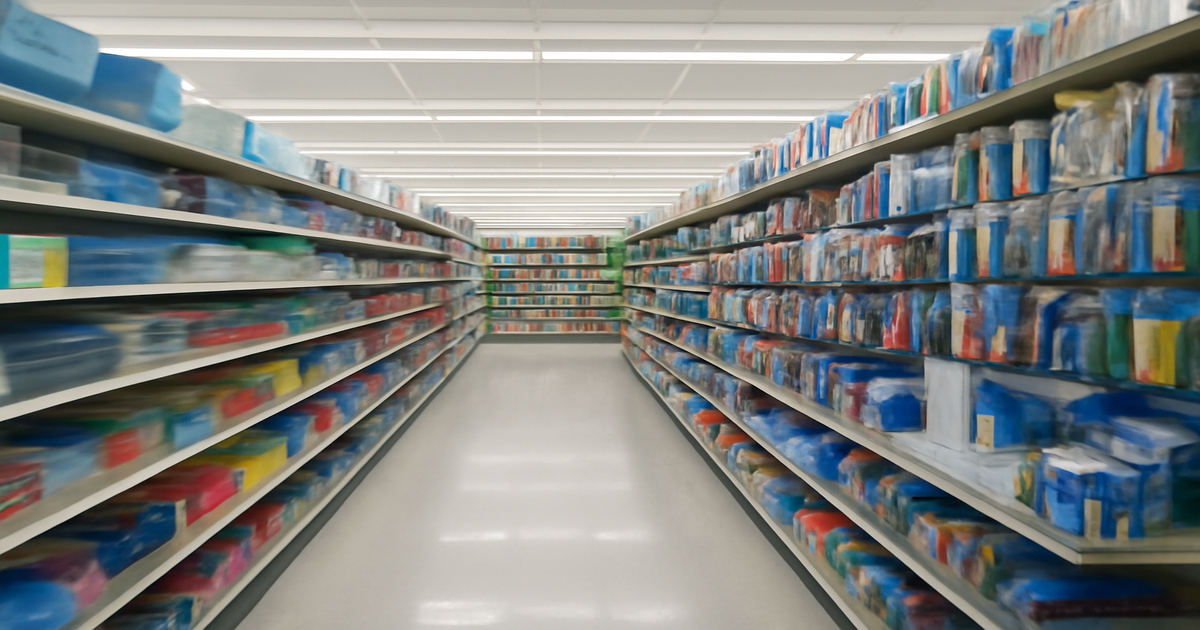
Korean retail through the early 2020s produced two results that appear contradictory. Daiso, the variable-price discount chain whose entire catalogue is sold at six fixed price points from 1,000 to 5,000 won, reported revenue passing three trillion won in 2023 across a store network exceeding 1,500 outlets, having roughly doubled its sales over five years. In the same period, Korean department stores reported record turnover, with the flagship Seoul stores of the major groups each clearing three trillion won in annual sales on the strength of luxury goods. Both ends of the price spectrum grew. The middle did not.
The inflation backdrop explains part of it. Consumer price inflation reached 5.1 percent in 2022, the highest in more than two decades, before easing to 3.6 percent in 2023 and further in 2024. Food and dining prices ran ahead of the headline index for much of that period, and utility charges rose as suppressed tariffs were partially corrected. Ministry of Employment and Labour data showed real wages falling in both 2022 and 2023, meaning nominal pay increases were more than consumed by prices. For households, the practical consequence was a search for categories where spending could be compressed without visible sacrifice.
Fixed-price retail is well designed for exactly that search. The proposition is not that any individual item is unusually cheap but that no decision is required: the price is known before the shelf is reached, comparison shopping is eliminated, and the basket cannot exceed expectations. For low-consideration purchases — household consumables, stationery, storage, basic cosmetics — that removal of deliberation is worth more than a marginally lower price elsewhere. The same logic drove growth in retailer own-brand ranges at supermarkets and convenience stores, where private-label goods expanded from a low-price fallback into a category with its own product development.
The luxury end is not a contradiction but a different market. Spending on premium goods in Korea is concentrated in a smaller group of households and is supported by asset values rather than wages, which decouples it from real income trends. It is also more visible: Korean consumption of luxury goods per capita has been estimated by investment bank research as among the world’s highest, and the department store format built around it remains dominant in a way it no longer is in most rich countries. That two retail formats at opposite price points can both thrive tells you their customers are not the same customers, or not the same purchases.
The squeezed middle is where the structural signal lies. Mid-market specialty retail, general merchandise chains and the traditional hypermarket format have all struggled through the same period, losing volume to fixed-price and own-brand competitors below and to online marketplaces on price and convenience. Barbell consumption of this kind is a well-documented response to income stagnation in other economies, and its appearance in Korea is consistent with the household balance sheet data: debt service ratios among the highest in the OECD, and a housing cost burden that fixes a large share of monthly outgoings before discretionary spending begins.
None of this reads as distress at the aggregate level. Korean retail sales in total have not collapsed, and unemployment has stayed low by international standards. What has changed is the composition — a growing share of everyday purchases routed through formats that guarantee the price will be small, while premium spending continues among households whose consumption is not constrained by monthly income at all.
The value retailers’ expansion is therefore a measurement of something not otherwise easy to see. Aggregate consumption figures capture how much is spent. The fixed-price shelf captures how carefully.