What the coffee republic reveals about Korean small business
Korea has roughly 100,000 coffee shops for 52 million people, a density that says more about how retirement savings are deployed than about how much anyone likes espresso.
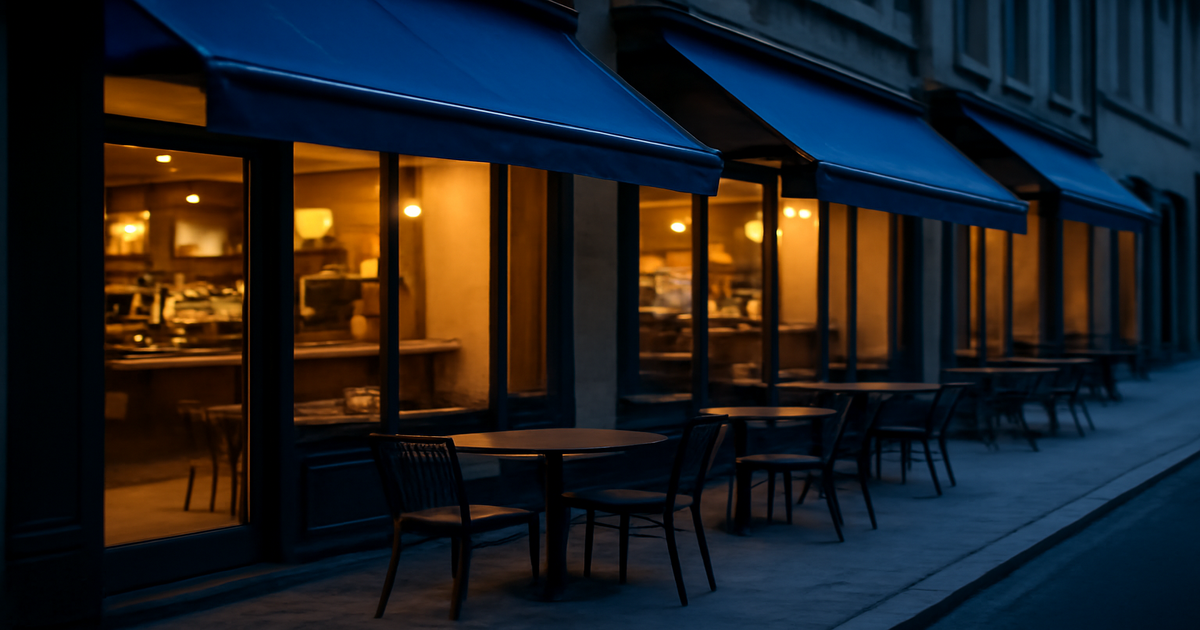
Walk any commercial street in Seoul and the count becomes absurd within a block or two. Korea passed roughly 100,000 registered coffee and beverage outlets in the early 2020s, according to tax registration data compiled by the National Tax Service, a figure that gives the country one of the highest café densities in the world and comfortably exceeds its number of convenience stores. Consumption supports part of it — industry surveys have put annual per-capita coffee consumption somewhere between 350 and 400 cups, among the highest anywhere — but demand alone does not explain a market this crowded.
The supply side does. A café is the most accessible business in Korea for someone with severance money and no sector experience. It requires no licence beyond a food hygiene registration, no professional qualification, and no inventory that cannot be bought weekly. Equipment can be leased. Staffing can be hourly. Most importantly, the business can be bought as a package: franchise head offices sell a fitted store, a supply contract and a brand, which converts an intimidating decision into a purchase. That is precisely the product a 50-year-old leaving a salaried career is in the market for.
What has changed since the 2010s is the price architecture. The premium chains that defined the first café boom have been joined by low-cost brands selling an americano for around 1,500 to 2,000 won, roughly a third of the older chains’ price. These operate on volume, small floor plates and takeaway traffic, and they expanded fastest exactly when household budgets tightened after 2022. The result is a market segmented by price rather than consolidated, with the premium and budget ends both growing while the unaffiliated middle absorbs the closures.
Those closures are the reliable part of the pattern. Statistics Korea’s business demography data have long shown that only about a third of new businesses survive five years, with accommodation and food service performing worse than the average. Café churn is high enough that the same premises can host three different brands in a decade, each successive tenant paying to fit out a space the last one fitted out. The capital destroyed in that cycle is mostly household capital: severance payments, retirement lump sums and secured loans against a home.
Real estate captures much of what the business generates. Korean commercial leasing customarily involves a large upfront deposit and, on established strips, a key-money payment to the outgoing tenant for the goodwill of the location. Rent rises with the commercial success of a neighbourhood, which means an operator who helps make a street popular can be priced out of it — a dynamic Korean commentary calls the “gentrification” problem and which lease-renewal protections introduced over the past decade have only partly addressed. In practice, a well-run café is often a machine for converting labour into rent.
The café count is therefore best read as an indicator, not an industry. It tracks how much household capital is being pushed out of salaried employment and into unlicensed retail, how easy franchising has made that transition, and how little else is available to people who leave corporate jobs in their early fifties. It rises when severance flows are large and when interest rates make deposits look unattractive; it thins when credit conditions bite.
That is also why policy aimed at cafés specifically — fee caps, franchise disclosure rules, subsidised closure support — treats the surface. The density is a downstream measurement of the labour market and the pension system. As long as the exit from salaried work happens a decade before the state pension begins, some large fraction of that gap will keep being filled by people opening shops, and coffee will keep being the cheapest shop to open.