The short life cycle of a Korean hot neighborhood
Seoul districts move from artist studios to rent spikes to displacement in a handful of years, faster than almost anywhere, and the protections built to slow it only partly work.
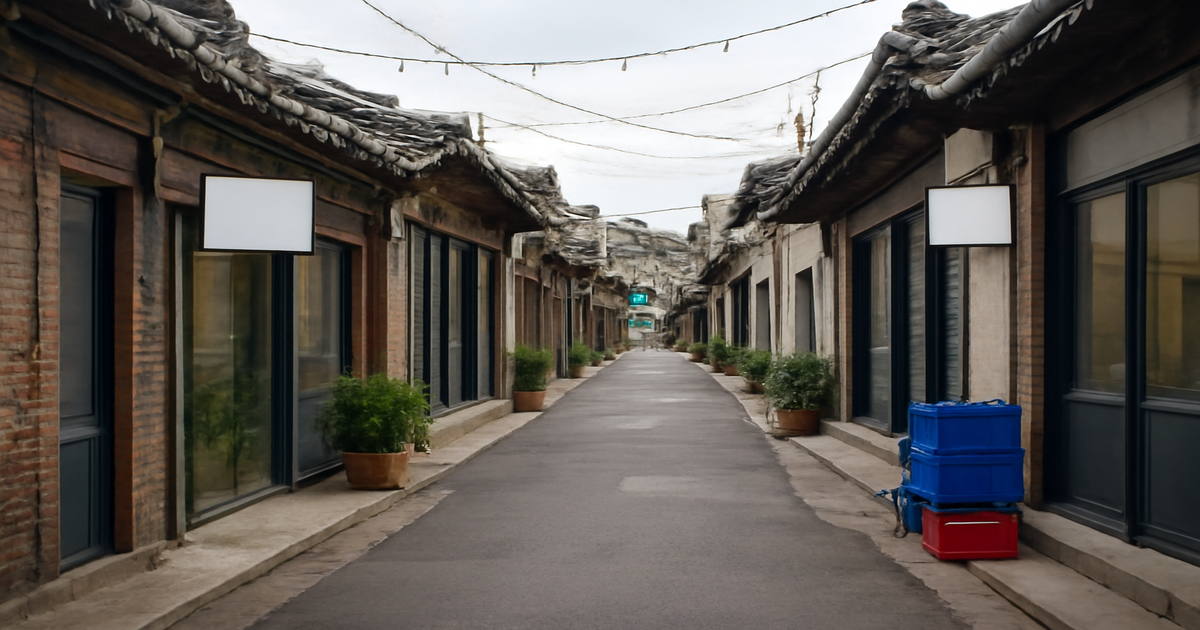
The sequence has repeated often enough in Seoul to be described as a template. A district with cheap rent and interesting building stock — narrow alleys, old workshops, hanok courtyards, printing shops — attracts tenants who cannot afford anywhere central: designers, small galleries, a first café run by someone who does the renovation themselves. Photographs circulate. Weekend visitors arrive. Larger operators follow, then chains, then a cosmetics flagship. Rents reset at each lease renewal, the tenants who created the district’s appeal leave for the next cheap area, and within a few years the streetscape is indistinguishable from three other districts that went through the same cycle earlier.
Garosu-gil in Sinsa ran the full arc through the 2010s. Gyeongridan-gil followed and then declined sharply. Ikseon-dong, a dense block of small hanok houses near Jongno that had been slated for redevelopment for years, converted into a cluster of cafés and restaurants from around 2017 and became one of the city’s most photographed streets within two years. Seongsu-dong, a district of shoe factories and auto shops east of the river, drew studios and social enterprises in the mid-2010s, then design offices, then corporate showrooms and a nearly continuous rotation of brand pop-up stores, until it was routinely described as carrying some of the highest commercial rents in the city.
What distinguishes the Korean version is speed. The cycle that took two or three decades in parts of Berlin or east London has repeatedly run in five to seven years in Seoul, and the visitor phase can peak and fade faster still. Several factors compress it. Commercial leases are short and rent is heavily front-loaded into a large refundable deposit plus monthly payment, so repricing happens frequently. The country’s density and transit network put any newly fashionable district within an easy trip for the whole metropolitan population. And social media discovery is unusually concentrated: a district becomes a destination through the same handful of platforms almost simultaneously, producing a visitor surge with no gradual build and, later, no gradual decline.
The premium system adds a distinctly Korean turn of the screw. A departing commercial tenant customarily sells the goodwill and fit-out of the location to the incoming tenant through a payment known as gwonrigeum, often tens of millions of won and sometimes far more. In a rising district that payment is an asset; when foot traffic collapses, it evaporates entirely, and the tenant who paid it at the peak absorbs the loss with no recourse. Small operators therefore bear both the upside risk and the downside risk of a cycle they do not control.
Policy has responded, with partial results. The commercial lease protection act was amended to extend a tenant’s guaranteed right of contract renewal from five years to ten in 2018, and it caps permitted rent increases within a protected lease and obliges landlords not to obstruct the recovery of premium payments. Seongdong district, home to Seongsu, went further and became a national reference case, adopting a local ordinance and a programme of voluntary mutual-benefit agreements under which landlords commit to restrained increases, alongside city-supported schemes that secure long leases for small shops and cultural tenants. Studies of these measures generally find that they slow displacement rather than prevent it, and that they work least well exactly where pressure is highest.
The deeper problem is that the value being captured was created by the tenants who are displaced, and no mechanism exists to pay them for it. A neighbourhood’s character is produced by small independent businesses over several years and then realized, as rent, by property owners in a single renewal cycle. That is the standard critique of gentrification everywhere. In Seoul it simply happens quickly enough that the same operator can live through it twice in a decade, moving one district further out each time — which is why the search for the next area now begins before the current one has finished rising.