Korea rebuilt high school around choice and the credit system is the test
The high school credit system, fully introduced for incoming students in 2025, lets Korean teenagers assemble their own course loads like university students — a structural bet that choice can coexist with the country's exam-centred culture.
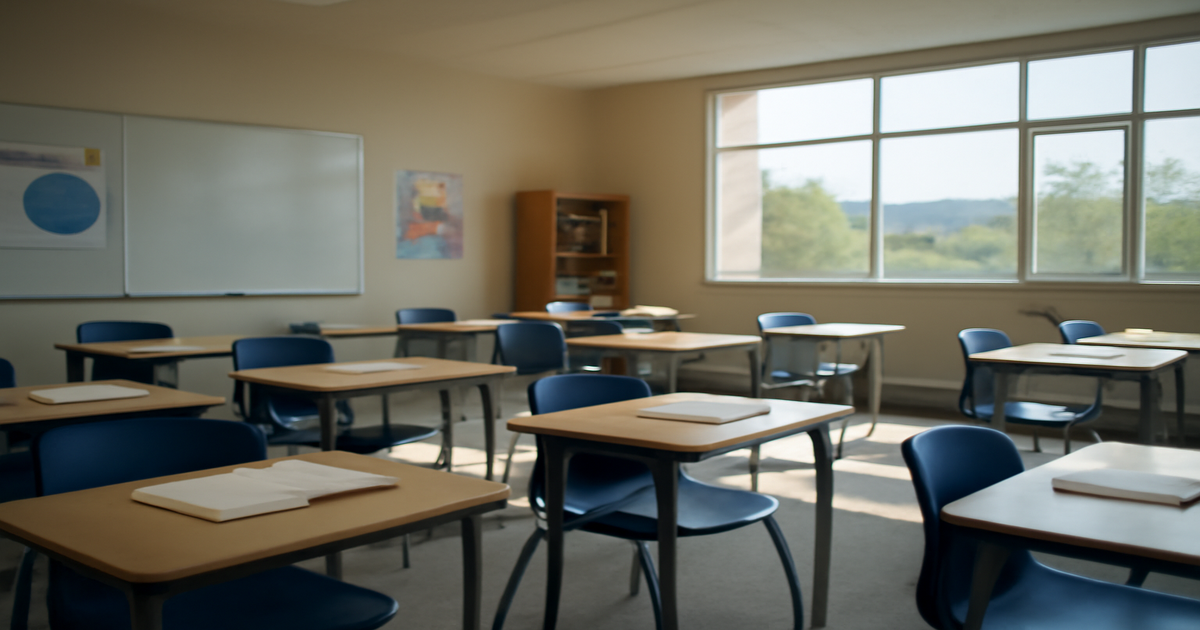
The most ambitious change to Korean secondary education in a generation arrived not as a new exam but as a new architecture. Under the high school credit system, phased in over several years and applied fully to students entering high school from 2025, teenagers no longer move through a largely fixed timetable. They accumulate credits across required and elective courses, choosing subjects in the manner of university students — career-oriented electives, inter-school online courses, even classes taken at neighbouring schools when their own cannot staff them.
The design borrows deliberately from systems in North America and Europe, and its intent is explicit: to loosen the lockstep uniformity that has defined Korean schooling, give students reasons to explore beyond the entrance exam’s core subjects, and make high school a place where interests are discovered rather than deferred. Graduation depends on completing the credit total and minimum achievement standards, rather than on seat time alone.
The friction, predictably, comes from everything around the classroom. A choice-based system assumes schools can offer meaningful choices, which strains small and rural schools with few teachers — the system’s answer, shared online courses and circuit-riding instructors, works better on paper than in staffing reality. It assumes students choose from interest, whereas the university admission calculus tilts choices toward subjects believed favourable for grades and records; teachers report advising sessions dominated by strategic rather than curious questions. And it assumes assessment can honour diverse pathways, which collides with a national exam that still tests a common core.
That last tension is the system’s hinge. Course choice becomes real only if the ways universities select students value what choice produces. Admissions reform and curriculum reform have therefore moved as an awkward pair, each waiting on the other, with the entrance exam’s format — and the periodic political battles over it — deciding how much of the credit system’s freedom students dare to use.
Teachers carry the transition’s weight. Advising hundreds of students through individual pathways, teaching new electives, and grading by achievement standards rather than curves all land on a workforce already reporting strain — and the standards-based grading the system introduces sits uneasily beside the relative rankings that admissions still consume.
For observers abroad, the experiment is worth following because it inverts the usual admiration. Foreign delegations long visited Korea to study how uniformity produced results; Korea is now testing whether it can afford diversity. If a system this exam-centred can make room for genuine choice, the lesson will travel widely. If choice withers into strategy, that lesson will travel too.